



Keywords
glioblastoma
MR tractography
How to Cite
Abstract
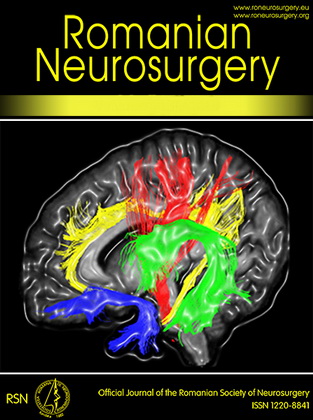
Resection of the maximum amount of tumoral tissue while preserving the function of the brain within or neighboring the tumor region established itself as a fundamental goal of modern oncologic neurosurgery. A major step in preoperative mapping of eloquent cerebral cortex was taken reliably through the use of functional magnetic resonance imaging. However it does not provide any information about the white matter tracts that may be affected by invasive, intrinsic brain tumors. The advances in diffusion-tensor (DT) imaging techniques have been used to map white matter tracts in the normal brain. The aim of this study was to demonstrate the role of DT imaging in preoperative mapping of white matter tracts in relation to cerebral neoplasms and the way it can influence the operative decision in our practice. Ten patients with brain malignancies within or neighboring eloquent cortical areas (nine glioblastoma and one grade two astrocytoma) underwent DT imaging examinations prior to tumor excision. Anatomical information about white matter tract location, orientation, and projections was obtained in every patient. Depending on the tumor type and location, evidence of white matter tract edema (one patient), infiltration (one patient), displacement (five patients), and disruption (three patients) could be assessed with the aid of DT imaging in each case. Diffusion-tensor imaging allowed for visualization of white matter tracts and was found to be beneficial in the surgical planning for patients with intrinsic brain tumors. The authors’ experience with DT imaging indicates that anatomically intact fibers may be present in abnormal-appearing areas of the brain. Whether resection of these involved fibers results in subtle postoperative neurological deficits requires further systematic study.


